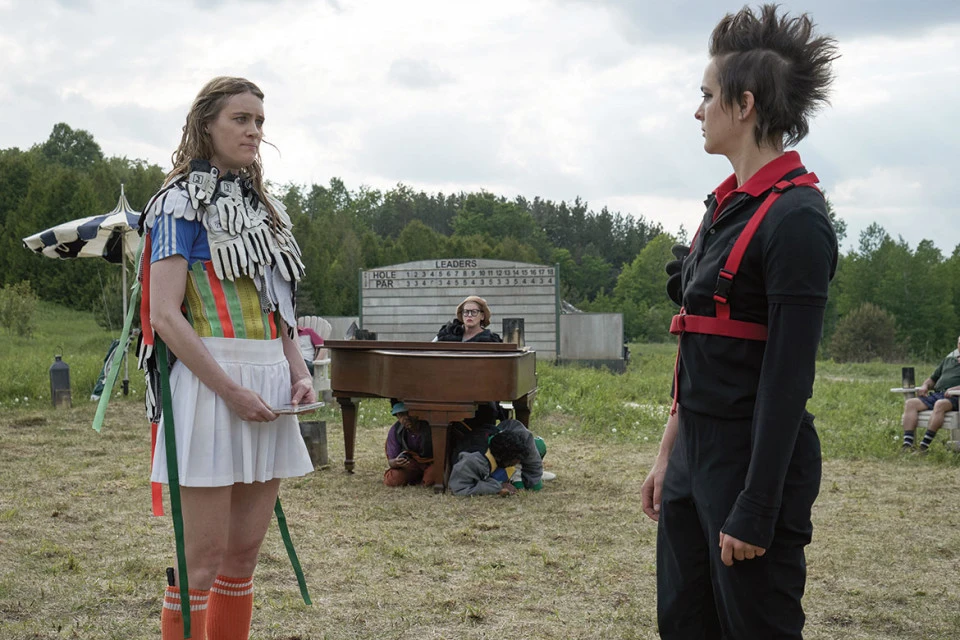
The Station Eleven TV show (Ian Watson / HBO Max)
I went to the hospital in February. Not intentionally either! I’d gone up to Beaver Mountain on a warm Saturday to ski. During my second run, I tried a hard left turn to slow down and go onto a catwalk through some trees. I messed up the turn and accomplished neither. Instead, I hit a tree at high speed, broke my scapula and got a concussion. Or so I’m told. I don’t remember it. 1
The Beaver ski patrol, who I cannot thank enough, heard the crash from the lift. They cut my jacket off me, got me down the mountain and onto the waiting helicopter. The lifelight flight took me to the emergency room in Ogden. I woke up confused Sunday morning. My spouse told me I’d had an accident and was in the hospital. Apparently I muttered, “What the fuck?” and fell asleep.
The three months since have been difficult. Did nothing but sleep for two weeks, and nothing but physical therapy after that. 2 But, I’ve recovered. My scapula healed and my concussion’s gone. I’m even running again.
I felt powerless. This accident happened because I skied too fast and messed up, but it could have been anything. People get in car crashes every day. Any of us is one fall in the bathtub from doctors asking you who’s president. There are no guarantees in life.
This brush with mortality colored my experience reading the 2024 book Everything Must Go: The Stories We Tell About the End of the World by Dorian Lynskey. Lyskey uses an impressive swathe of apocalyptic pop culture, from the Book of Revelation to Bo Burnham’s Inside, to interrogate the human psyche.
Sometimes writing about the end of the world is a way to express our fears. Much science fiction after World War II, for example, is colored by terror of nuclear war.
I was struck, though, by how much apocalyptic fiction Lynskey mentions is wish fulfillment. Some people can’t wait for the world to end.
Take the people disgusted with modernity. The 1800s artist William Morris wrote in a letter:
I have no more faith than a grain of mustard seed in the future history of “civilization”, which I know now is doomed to destruction, probably before very long: what a joy it is to think of! And how often it consoles me to think of barbarism once more flooding the world, and real feelings and passions, however rudimentary, taking the place of our wretched hypocrisies.
An artilleryman in The War of the Worlds expresses even more venomous sentiments:
“We can’t have any weak or silly,” he explains. “Life is real again, and the useless and cumbersome and mischievous have to die. They ought to die. They ought to be willing to die. It’s a sort of disloyalty, after all, to live and taint the race.”
Modern life, according to these people, is fake. Soft. Cushy. Apocalypse will free us.
Perhaps I am still affected by the blow to my head from hitting a tree, but yearning for apocalypse is a joke. Asking the “useless and cumbersome” to die, as if those were intrinsic qualities. As if all of us are not one bad fall away from broken bones or sprains or any number of disabling injuries. Live long enough and everyone picks up a disability or two.
The truth is barely anyone would make it in the apocalypse. We all rely on government, society and medicine to keep us alive and healthy.
I found Station Eleven refreshingly brutal on this point. In Emily St. John Mandel’s novel — written six years before COVID — influenza has killed most humans on the planet. Survivors live a dangerous, short, dirty existence. One character in a wheelchair dies by suicide shortly after the outbreak. His decision goes unexplained, but my impression was he felt there was no hope for someone like him.
You don’t see these details in many post-apocalyptic stories. Personally, I’m used to end-times tales like Zombieland, where the apocalypse becomes an excuse to go on a shopping spree. Rarely is The After unsentimental and… gross. But it would be. We are all creatures of modern society. Who knows how many people would be dead without antibiotics alone.
Do not yearn for apocalypse. There will be no one to take CT scans and make sure your scapula heals. A twisted ankle or rogue infection might really be the death of you. And if you survive long enough, you’ll just become “useless and cumbersome” to some crazy artilleryman living in a tunnel.