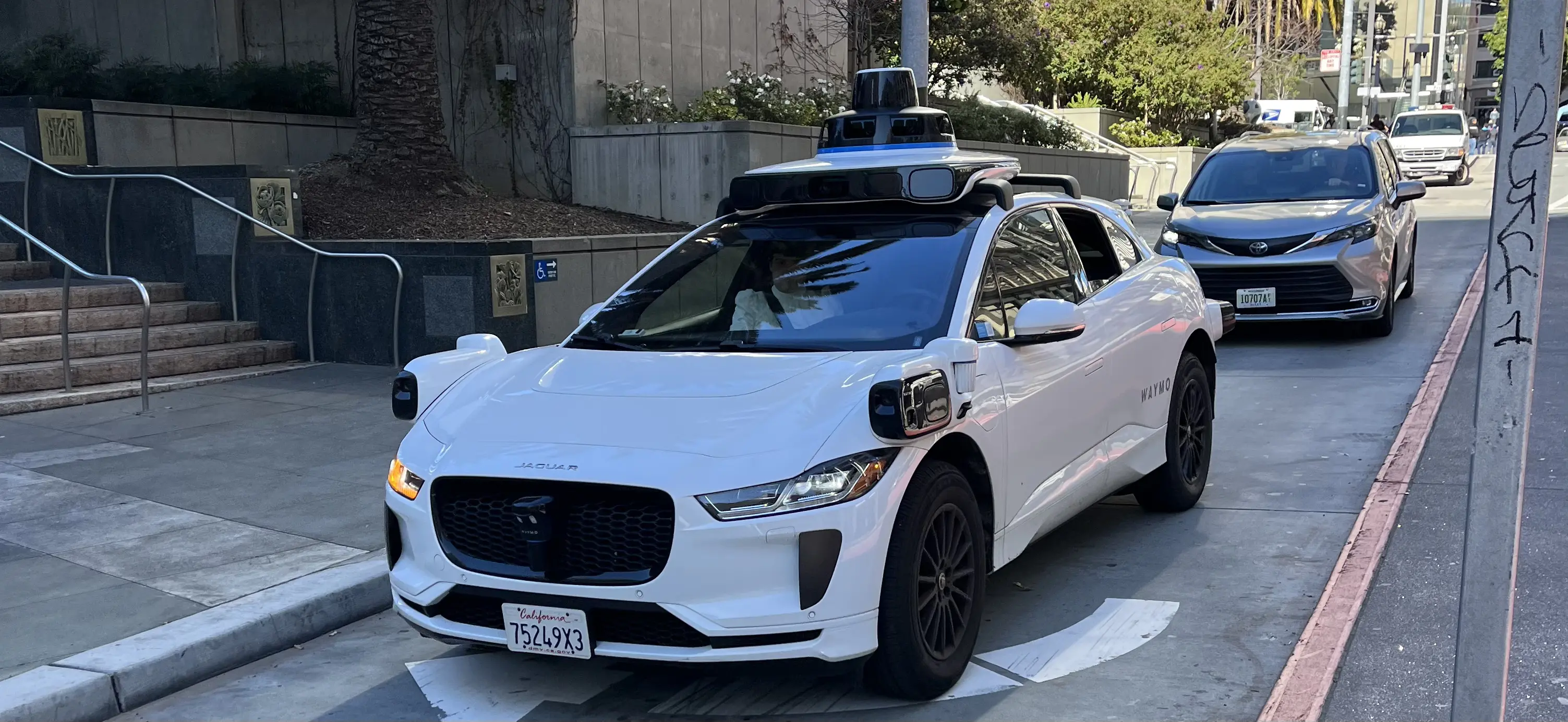
A Waymo spotted in downtown San Francisco.
During a visit to San Francisco last February, I rode in a Waymo and was amazed at how safely it drove. During our trip, it stopped for three separate pedestrians when crossing an intersection.
As a pedestrian who cares about traffic safety, I loved this. A human driver would never have yielded to three pedestrians. A human would’ve gunned it and dared that third guy to cross in front of him. That’s standard behavior for drivers in America, and it’s why drivers killed 7,522 pedestrians in 2022 alone. The Waymo actually followed the law. It didn’t even speed!
Say what you will about self-driving cars, but what Waymo has on the roads of San Francisco is better that most humans.
Well, now Waymo has data backing up this impression. The New York Times has an essay from a neurosurgeon advocating for wider self-driving adoption:
Self-driving car company Waymo recently released data covering nearly 100 million driverless miles in four American cities through June 2025, the biggest trove of information released so far about safety. I spent weeks analyzing the data. The results were impressive. When compared to human drivers on the same roads, Waymo’s self-driving cars were involved in 91 percent fewer serious-injury-or-worse crashes and 80 percent fewer crashes causing any injury. It showed a 96 percent lower rate of injury-causing crashes at intersections.
The author mentions one thing some drivers dislike about Waymos:
There’s a common misconception that these cars brake erratically and get rear-ended. But they are involved in far fewer rear-end injury crashes than human drivers are.
I can see why some drivers feel Waymos are “erratic.” They brake differently than humans, in that they actually brake.